Boost Your Online Visibility: How to Improve SEO Ranking Without Tools
Improving your website's search engine ranking is crucial for increasing online visibility, driving more traffic, and ultimately, boosting conversions. In this step-by-step tutorial, you will learn how to improve SEO ranking without relying on tools, by implementing simple yet effective strategies that will take your website to the top of search engine results pages (SERPs). By following these easy-to-execute steps, you'll be able to enhance your website's credibility, increase its search engine ranking, and stay ahead of the competition.
Step 1: Optimize Your Website's Content with Relevant Keywords to Improve SEO Ranking
When it comes to improving SEO ranking, high-quality, engaging, and keyword-rich content is key. Start by identifying the most relevant and high-traffic keywords related to your niche, and incorporate them naturally into your website's content. However, be cautious not to overdo it, as keyword stuffing can lead to penalties from search engines. Aim for a keyword density of 1-2% and focus on creating content that provides value to your audience. For example, if you're a fashion blogger, your content could include keywords like "summer fashion trends" or "sustainable clothing brands." 
Step 2: Use Header Tags to Improve SEO Ranking and Structure Your Content
Header tags (H1, H2, H3, etc.) play a crucial role in improving SEO ranking by helping search engines understand the structure and hierarchy of your content. Use header tags to break up your content into sections, making it easier for users to navigate and for search engines to crawl. For instance, if you're writing a blog post about "The Ultimate Guide to Improving SEO Ranking," you could use H2 tags for subheadings like "Step 1: Optimize Your Website's Content" and H3 tags for sub-subheadings like "Keyword Research and Planning." 
Step 3: Improve SEO Ranking by Optimizing Your Website's Meta Tags
Meta tags, including title tags and meta descriptions, are essential for improving SEO ranking as they provide search engines with a summary of your website's content. Your title tag should be attention-grabbing, descriptive, and include your target keywords, while your meta description should be concise, informative, and compelling. For example, if you're a fitness coach, your title tag could be "Get Fit with Our Expert Coaching Services" and your meta description could be "Transform your body with our personalized fitness coaching services, tailored to your unique needs and goals."
Step 4: Leverage the Power of Internal Linking to Improve SEO Ranking
Internal linking is a powerful strategy for improving SEO ranking by helping search engines understand the relationship between different pages on your website. By linking to other relevant and useful pages on your website, you can improve user experience, increase page views, and enhance your website's authority. For instance, if you're writing a blog post about "The Benefits of Meditation," you could link to other related posts like "Meditation Techniques for Beginners" or "The Science Behind Meditation and Mindfulness."
Step 5: Improve SEO Ranking by Optimizing Your Website's Images
Images can significantly impact your website's load time, user experience, and search engine ranking. To improve SEO ranking, make sure to optimize your images by compressing them, using descriptive file names, and including alt tags. For example, if you're a food blogger, you could use an image file name like "summer-salad-recipe.jpg" and an alt tag like "Fresh summer salad recipe with mixed greens and seasonal vegetables."
Step 6: Enhance User Experience to Improve SEO Ranking and Drive Conversions
User experience is a critical factor in improving SEO ranking, as it directly impacts user engagement, bounce rates, and conversion rates. To improve user experience, focus on creating a clean, intuitive, and responsive website design that provides value to your audience. Ensure that your website is mobile-friendly, has fast load times, and is easy to navigate. For instance, if you're an e-commerce website, you could use a simple and secure checkout process, offer multiple payment options, and provide clear product information.
Step 7: Monitor and Analyze Your Website's Performance to Improve SEO Ranking
Monitoring and analyzing your website's performance is crucial for improving SEO ranking, as it helps you identify areas for improvement and track the effectiveness of your SEO strategies. Use analytics tools to track your website's traffic, engagement, and conversion rates, and adjust your SEO strategies accordingly. For example, if you notice that your website's bounce rate is high, you could improve user experience by simplifying your website's design, reducing load times, or enhancing your content's quality.
Frequently Asked Questions (FAQs)
Q: How long does it take to see improvements in SEO ranking?
A: Improving SEO ranking takes time, effort, and patience. It can take several weeks, months, or even years to see significant improvements in SEO ranking, depending on the competitiveness of your niche and the effectiveness of your SEO strategies.
Q: What is the most important factor for improving SEO ranking?
A: The most important factor for improving SEO ranking is high-quality, engaging, and keyword-rich content that provides value to your audience. However, other factors like website design, user experience, and technical optimization also play a crucial role in improving SEO ranking.
Q: Can I improve SEO ranking without any technical expertise?
A: Yes, you can improve SEO ranking without any technical expertise by following simple and effective strategies like optimizing your website's content, using header tags, and leveraging internal linking. However, having some technical knowledge can be beneficial in implementing more advanced SEO strategies.
7 Ways To Improve SEO Ranking
7 Ways to Improve SEO Ranking
8 Ways To Improve Your SEO Ranking
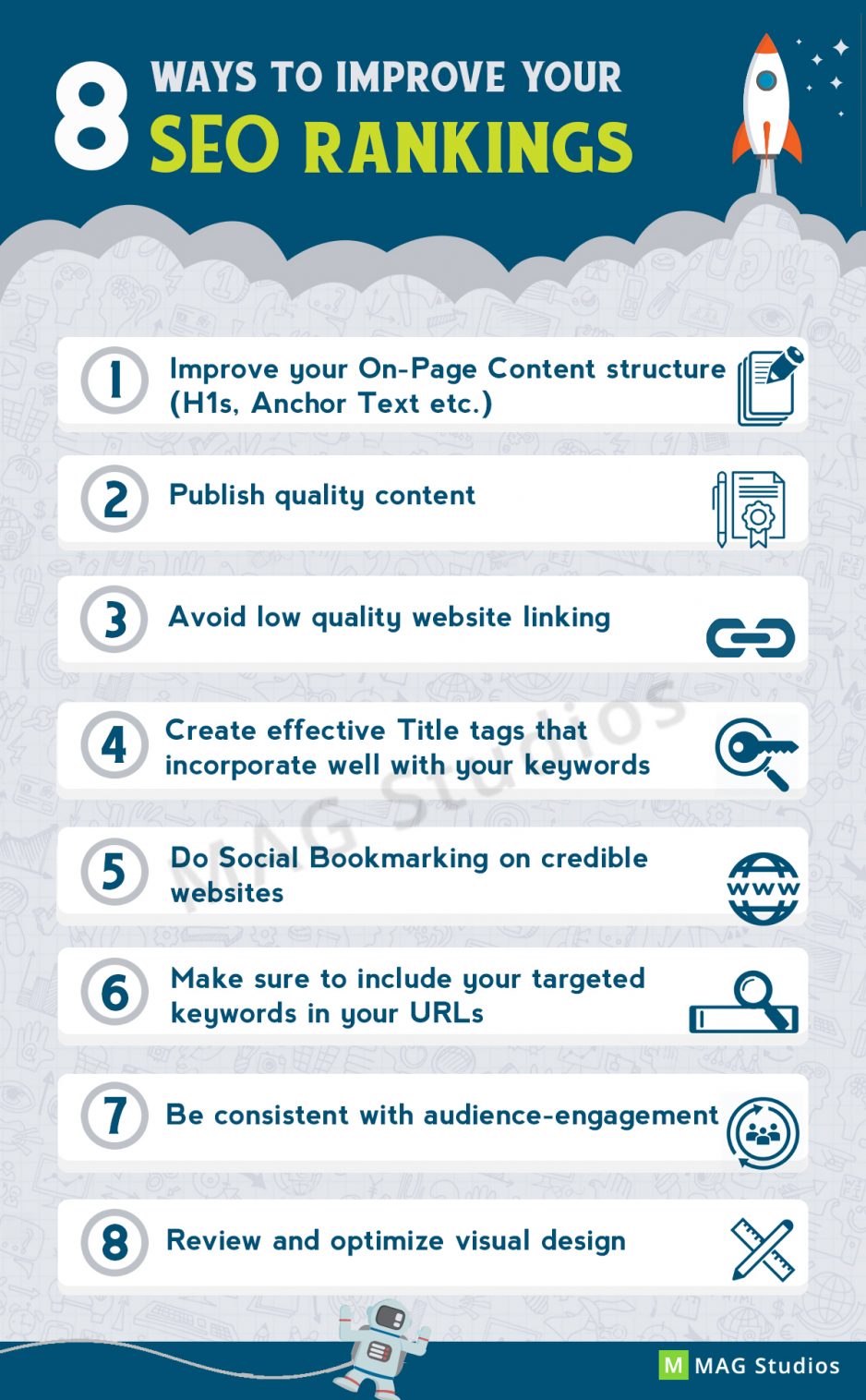
8 Ways to Improve your SEO Ranking
Top 50 Ways To Immediately Improve SEO Ranking Of Your Website
Top 50 ways to Immediately improve SEO ranking of your website