Mastering the Art of Waking Up Early: A Comprehensive Guide to Rising with the Sun
Waking up early can be a challenging task, especially for those who are not naturally morning people. However, with the right strategies and techniques, anyone can learn to wake up early and start their day feeling refreshed and energized. In this article, we will provide a step-by-step guide on how to wake up early consistently, including tips and tricks to help you establish a morning routine that works for you. By the end of this tutorial, you will be equipped with the knowledge and skills necessary to rise with the sun and take control of your day.
Step 1: Set Realistic Goals and Establish a Wake-Up Routine
To wake up early, you need to set realistic goals and establish a wake-up routine that works for you. Start by setting a specific wake-up time and gradually work your way up to your desired time. For example, if you're used to waking up at 10 am, don't try to wake up at 5 am right away. Instead, start by waking up at 8 am and gradually move your wake-up time earlier by 15-30 minutes every few days. This will help your body adjust to the new wake-up time and reduce the likelihood of feeling tired and groggy in the morning. 
Step 2: Create a Sleep-Conducive Environment and Establish a Bedtime Routine
Creating a sleep-conducive environment and establishing a bedtime routine are crucial for waking up early. Make sure your bedroom is dark, quiet, and cool, and invest in a comfortable mattress and pillows. Establish a bedtime routine that signals to your body that it's time to sleep, such as reading a book, taking a warm bath, or practicing relaxation techniques like deep breathing or meditation. Aim to go to bed at the same time every night and avoid stimulating activities like watching TV or scrolling through your phone before bedtime. 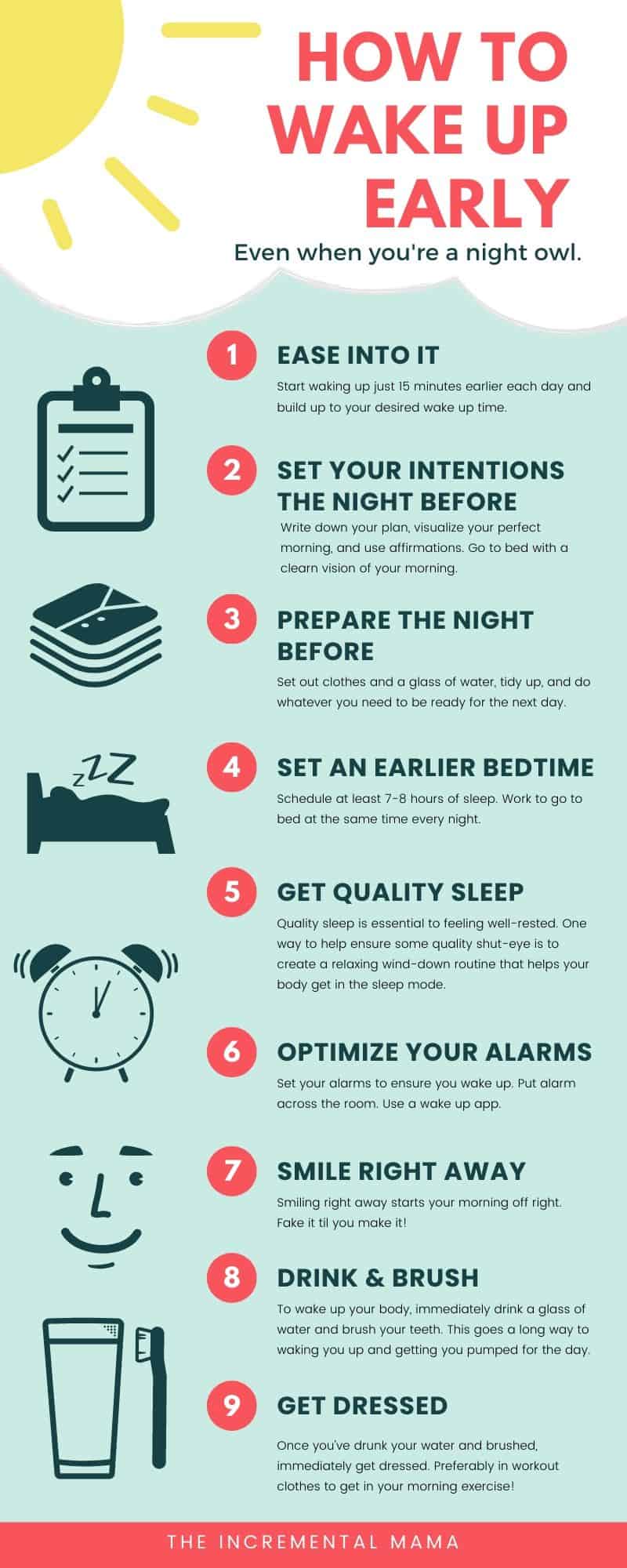
Step 3: Develop a Morning Routine that Works for You
Developing a morning routine that works for you is essential for waking up early and starting your day on a positive note. Experiment with different activities like exercise, meditation, or journaling to find what works best for you. Start with small, achievable goals like drinking a glass of water or stretching for 5 minutes, and gradually add more activities to your routine as you become more comfortable waking up early. For example, you can start with a 10-minute morning routine and gradually increase it to 30 minutes or more as you become more confident in your ability to wake up early. 
Step 4: Use Light to Your Advantage and Get Some Morning Sunlight
Light plays a crucial role in regulating our circadian rhythms, and getting some morning sunlight can help signal to your body that it's time to wake up. Open your curtains or take a short walk outside in the morning to get some natural light, and avoid using screens or artificial light sources that can interfere with your body's natural wake-up time. You can also use a wake-up light, which is a device that simulates a sunrise by gradually increasing the light in your room, to help signal to your body that it's time to wake up. 
Step 5: Avoid Snoozing and Get Out of Bed as Soon as Your Alarm Goes Off
Snoozing can be a major obstacle to waking up early, as it can make you feel groggy and disoriented. To avoid snoozing, place your alarm clock across the room so you have to get out of bed to turn it off, and avoid using the snooze button. Instead, get out of bed as soon as your alarm goes off and start your morning routine. You can also use a smart alarm that can detect when you're in a light sleep phase and wake you up during a more gentle period, making it easier to wake up feeling refreshed and energized. 
Step 6: Make a Plan for the Morning and Set Priorities
Having a plan for the morning can help you stay motivated and focused, and setting priorities can help you make the most of your time. Start by making a list of the things you want to accomplish in the morning, and then prioritize them based on importance and urgency. For example, if you need to get to work or school, make sure you prioritize getting dressed and having breakfast. You can also use a planner or app to help you stay organized and on track. 
Step 7: Get Accountability and Support from Friends or Family
Having accountability and support from friends or family can be a great motivator for waking up early. Share your goals with a friend or family member and ask them to hold you accountable, or join a morning group or club to connect with others who share your goals. You can also use social media to share your progress and connect with others who are working towards similar goals. 
Step 8: Reward Yourself and Celebrate Small Wins
Rewarding yourself and celebrating small wins can be a great motivator for waking up early. Set small rewards for yourself, such as a favorite breakfast or a short break, and celebrate your successes along the way. You can also use a reward system, such as stickers or points, to track your progress and stay motivated. 
Step 9: Be Consistent and Patient with Yourself
Consistency and patience are key when it comes to waking up early. It may take some time for your body to adjust to the new wake-up time, so be patient and don't get discouraged if you don't see immediate results. Stick to your routine, even on weekends or days off, and avoid giving in to the temptation to sleep in. With time and practice, waking up early will become second nature, and you'll start to feel the benefits of rising with the sun. 
Step 10: Continue to Learn and Improve Your Morning Routine
Finally, continue to learn and improve your morning routine by seeking out new tips and strategies, and experimenting with different activities and habits. Read books, articles, and blogs on waking up early, and connect with others who share your goals. With time and practice, you'll become a morning person, and waking up early will become a natural part of your daily routine. 
Frequently Asked Questions
Q: How long does it take to adjust to a new wake-up time? A: It can take anywhere from a few days to a few weeks to adjust to a new wake-up time, depending on your individual circadian rhythms and sleep patterns. Q: What if I'm not a morning person? A: You can still learn to wake up early, even if you're not a natural morning person. Start by setting small, achievable goals, and gradually work your way up to your desired wake-up time. Q: How can I stay motivated and avoid going back to my old habits? A: Stay motivated by setting small rewards for yourself, celebrating your successes, and seeking out accountability and support from friends or family. Avoid going back to your old habits by being consistent, patient, and kind to yourself, and by continuing to learn and improve your morning routine.
9 Tips On How To Wake Up Early Everyday To Improve Yourself | How To

9 Tips on How to Wake Up Early Everyday to Improve Yourself | How to ...
How To Wake Up Early: 8 Expert-Tested Tips - StylePersuit

How to Wake Up Early: 8 Expert-Tested Tips - StylePersuit
6 Secrets To Consistently Waking Up Early

6 Secrets to Consistently Waking Up Early